

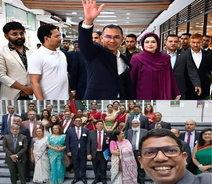
For many years, public discussions have revolved around accountability, transparency, and cost efficiency in state affairs. In particular, state visits abroad have often been criticized for involving excessive personnel, unnecessary expenditures, and the misuse of public funds. Against this backdrop, Prime Minister Tarique Rahman’s recent visits to Malaysia and China have drawn attention as a notable departure from past practices.
According to reports, only 28 individuals accompanied the Prime Minister on these important official visits. The delegation was carefully selected based on state necessity, the agenda of the visits, and direct involvement in diplomatic and policy-related activities. Sources indicate that the Prime Minister issued clear instructions to keep expenses under control and to ensure that only essential personnel were included in the delegation.
In the past, the practice of taking large delegations on state visits had frequently raised concerns among various observers. Critics argued that many such trips included officials, political figures, and other individuals whose presence was not directly related to the objectives of the visit. As a result, state expenditures increased, and questions were often raised about the overall effectiveness of these trips.
A section of political analysts believes that the participation of hundreds of individuals in some previous state visits generated negative public perceptions. Allegations of extravagance and unnecessary spending during foreign tours funded by public resources remained a subject of debate for years. The use of chartered aircraft, oversized delegations, and elaborate arrangements were often viewed by critics as examples of wasteful expenditure.
The media community has also engaged in discussions regarding these issues. It has been alleged that, during some previous administrations, a significant number of journalists were included in official delegations. Critics claimed that instead of focusing on the achievements, diplomatic outcomes, or national interests associated with the visits, some media engagements tended to emphasize praise and personal glorification. According to observers, such practices weakened professional journalism and undermined a culture of accountability.
In contrast, reports suggest that no additional journalists were included in the current delegation beyond the necessary members of the Prime Minister’s Press Wing. Likewise, no ministers, state ministers, or bureaucrats whose responsibilities were unrelated to the visit’s agenda were allowed to join the delegation. This approach appears to have reinforced the primary objectives and priorities of the tour.
Videos circulating on social media have also highlighted a different image of the delegation. Members of the team were seen carrying their own luggage and personal belongings. Such scenes are commonly observed among leaders and government representatives in many developed countries, where unnecessary formalities and displays of privilege are often avoided.
Observers note that symbolic actions can have a significant impact on governance. When citizens see top state officials demonstrating fiscal discipline and personal responsibility, it can encourage similar practices throughout the administrative system. Such initiatives not only promote the efficient use of public resources but can also strengthen public confidence in government institutions.
In many advanced democracies, state leaders are known for determining the size of official delegations based strictly on necessity and for exercising caution regarding public expenditure. Experts believe that such an approach is particularly important for a developing country like Bangladesh, where resources are limited and efficient governance remains a key priority.
Through his visits to Malaysia and China, Prime Minister Tarique Rahman appears to have conveyed a message that extends beyond the visits themselves. The approach may be viewed as a symbolic example of austerity, accountability, and needs-based decision-making in public administration. If state visits become more effective, productive, and cost-efficient, it could contribute positively to both the economy and the broader culture of governance.
Ultimately, the discussions surrounding Prime Minister Tarique Rahman’s first foreign tour suggest the possibility of a new direction in state management. If this approach continues in the future, many believe it could establish a new benchmark for responsible public spending while also reflecting the expectations of the people.