

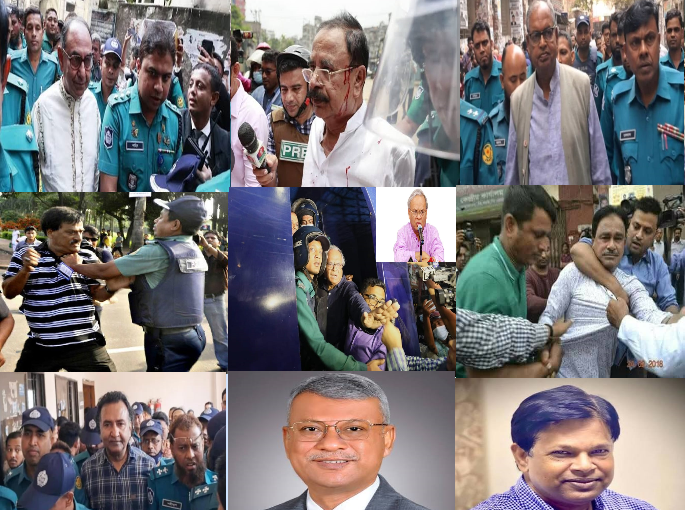
Following the formation of the BNP government under Prime Minister Tarique Rahman, discussions have focused not only on the leaders who have secured positions in the Cabinet but also on several long-serving and tested party leaders who have been left out. Among those being widely discussed are BNP Standing Committee member Mirza abbas, Gayeshwar Chandra Roy, Vice Chairman Shamsuzzaman Dudu, veteran leader Zainul Abdin Farroque, BNP Chairman’s Adviser Syed Moazzem Hossain Alal, and former Dhaka city BNP leader Habib-un-Nabi Khan Sohel.
However, many within the party do not believe that being excluded from the Cabinet necessarily means these leaders have not been politically recognised. Rather, some BNP leaders believe that long-serving and committed leaders may be gradually accommodated through organisational positions and various government responsibilities after the formation of the government.
Ruhul Kabir Rizvi has already been appointed as an Adviser to the Prime Minister on Political Affairs with the rank and status of a minister, as well as Adviser to the Ministry of Industries. Information from the Prime Minister’s Office has confirmed his appointments. There is also speculation that he may be given the position of acting Secretary General of the BNP.
The future roles of other tested leaders outside the Cabinet, however, remain a subject of considerable interest among BNP activists at the grassroots level. Many of those who spent years in opposition, facing cases, arrests, attacks, imprisonment and political pressure, expect that their experience will be utilised in important party and state responsibilities alongside the task of running the government.
Mirza Abbas
Mirza Abbas is one of the most prominent and tested political leaders in Dhaka. Having been involved in BNP politics for decades, he has faced political persecution, numerous cases, arrests and imprisonment at different stages of his career.
He also endured personal tragedy amid intense political pressure, including the loss of his elderly mother during a difficult period of his life. Despite personal grief and political adversity, he remained active in party affairs.
Abbas played an active role in various BNP movements and political struggles, particularly during periods of crisis. From street programmes to organisational activities, he was frequently seen standing alongside party leaders and activists. Neither legal cases nor arrests and political pressure forced him to abandon his longstanding political position.
BNP leaders and activists have long remembered his role in keeping the party organised and its grassroots activists united during difficult times. His continued loyalty and activism amid political adversity are regarded by party insiders as an important part of the BNP's history.
His long political career, marked by sacrifice, struggle and experience in dealing with adversity, remains significant to BNP activists. Many in the party believe his contribution will continue to be remembered.
Gayeshwar Chandra Roy
Gayeshwar Chandra Roy, a senior member of the BNP Standing Committee, has played an important role in the party for many years. During the BNP's years in opposition, he was frequently seen at the forefront of various movements and political programmes.
He remained active even in situations involving police attacks, tear gas and arrests.
In 2023, Roy was injured during clashes with police at a BNP programme in Dholaikhal in Old Dhaka. Photographs and videos of the incident attracted widespread attention at the time.
Throughout his long political career, Roy has held several important positions within the BNP's organisational structure. In the 2026 13th parliamentary election, he was elected from the Dhaka-3 constituency. According to Election Commission results, he won the seat with 99,163 votes.
Although he was elected to parliament, his absence from the Cabinet has generated discussion among a section of the party. Nevertheless, he has remained active in parliamentary affairs since the formation of the government.
Ruhul Kabir Rizvi
Ruhul Kabir Rizvi became one of the most recognisable faces of the BNP during the party's difficult years, particularly because of his prolonged presence and activities at the party's central office in Nayapaltan.
He faced cases, arrests and imprisonment at different times while continuing to communicate the party's position through press conferences and political programmes.
During the BNP's years in opposition, Rizvi was one of the party's most regular spokespersons at press briefings. Despite government pressure, legal cases and arrests, he remained active in party programmes and in the media.
However, it would not be entirely accurate to say that Rizvi has been left out of government. He has been appointed Adviser to the Prime Minister on Political Affairs with the rank and status of a minister, as well as Adviser to the Ministry of Industries.
According to the latest information from the Prime Minister's Office, he is serving simultaneously as Political Affairs Adviser to the Prime Minister and Adviser to the Ministry of Industries.
Therefore, although he is not a full Cabinet minister in the conventional sense, Rizvi is holding important responsibilities in the administration with ministerial rank.
Shamsuzzaman Dudu
BNP Vice Chairman Shamsuzzaman Dudu has long been known as one of the party's most outspoken leaders. He has regularly represented the BNP's position on television talk shows, in the media, at rallies and during party programmes.
During the BNP's prolonged period in opposition, he remained active despite facing cases, arrests and political pressure. In recent statements, he has also spoken about the long-standing persecution and political deprivation suffered by BNP leaders and activists.
In a statement to Bangladesh Sangbad Sangstha (BSS) in July 2026, Dudu said BNP leaders and activists had faced various forms of repression and persecution for 18 years and that members of their families had also suffered as a result.
His absence from the Cabinet has generated discussion within a section of the party. Dudu himself, however, has called for patience among party leaders and activists. His comments reflect an expectation that long-serving and committed leaders will gradually be recognised in the future.
Zainul Abdin Farroque
Veteran BNP leader Zainul Abdin Farroque has long been a familiar face of the party's anti-government movements. While serving as the Chief Whip of the opposition, he was seriously injured in a police attack in front of the Parliament building, an incident that received widespread attention in Bangladesh's political arena.
Over the course of his long political career, Farroque has been elected to parliament several times. He was also elected as a member of parliament in the 2026 election.
A section of his political supporters had expected him to be included in the Cabinet. However, after being left out, Farroque did not publicly express disappointment. Instead, he described the situation as a normal reality within a large political party.
He has said that the BNP is a large political organisation with many leaders and activists who have made sacrifices. It is not possible to accommodate everyone at the same time, he said, expressing confidence that the Prime Minister would gradually recognise and assign responsibilities to deserving leaders.
Syed Moazzem Hossain Alal
Syed Moazzem Hossain Alal, an Adviser to the BNP Chairman, has also remained active in street politics and the media for many years.
During anti-government movements, he regularly represented the party's position on television talk shows and at public rallies, while also participating in street programmes.
Various BNP sources and Alal himself have referred to the large number of political cases filed against him. He also spent considerable periods in detention and faced political harassment while continuing his activities for the party.
Alal has responded to his exclusion from the Cabinet by emphasising patience rather than disappointment. The central message of his statements is that it is not possible to recognise all deserving leaders immediately after the formation of a government. He expects long-serving and committed party leaders to be gradually recognised and given responsibilities.
Habib-un-Nabi Khan Sohel
Habib-un-Nabi Khan Sohel, who has long been active in Dhaka's BNP politics, is another familiar face of the party's street movements.
During the BNP's years in opposition, he remained involved in organising activists despite facing cases, arrests and periods in hiding.
His active role was particularly noticeable during protests by BNP activists in the Bakshibazar area in 2018, when former Prime Minister Khaleda Zia was taken to the temporary court there. According to party activists, a significant part of Sohel's political life over the past decade and a half has been spent dealing with legal cases and court-related activities.
However, the failure to secure a nomination in the parliamentary election, followed by his exclusion from the Cabinet, has reportedly caused disappointment among some of his supporters.
Khandaker Abu Ashfaq
Khandaker Abu Ashfaq, a familiar figure in BNP politics in Dhaka district, has also remained active in the party's long-running political movements.
His role in party programmes and his experience of facing political pressure for an extended period have been frequently discussed among local BNP activists.
Party sources say he faced cases and arrests and at times remained in hiding during the BNP's years in opposition. His supporters also claim that his business interests suffered because of his political activities.
In the 2026 election, he was elected from the Dhaka-1 constituency. Before the election, he was actively involved in the BNP's campaign as the party's candidate.
Although he is now a member of parliament, his exclusion from the Cabinet has prompted questions among some grassroots activists in his constituency about how much space long-serving field-level leaders will receive in the running of the government.
Others in Discussion
Saiful Alam Nirob is also among the familiar faces of the BNP's street politics whose name has emerged in discussions about long-serving leaders.
Having remained active in Dhaka city BNP politics for many years, he faced cases and imprisonment. He was expelled from the party after contesting the Dhaka-12 constituency election against the party's decision. However, party leaders claim that his supporters have continued to participate in various political programmes.
The names of former Jatiyatabadi Chhatra Dal presidents Abdul Kadir Bhuiyan Jewel and Fazlur Rahman Khokon, former general secretaries Akramul Hasan Mintoo and Iqbal Hossain Shyamol, and former president Kazi Rawnakul Islam Shrabon have also emerged in discussions about leaders who were active in the BNP's long-running movements.
Some of these leaders were denied nominations, while others currently do not hold significant positions at the central level of the party.
Grassroots Await Recognition
According to a section of BNP leaders and activists, recognising long-serving and committed leaders should not be limited to giving them Cabinet positions.
They argue that the experience of these leaders could also be utilised through organisational responsibilities, appointments to various government institutions and agencies based on merit, nominations in local government elections and participation in important policymaking activities.
BNP Standing Committee member Selima Rahman has also spoken about the need to recognise leaders and activists who made sacrifices over the years.
According to her, many party leaders and activists spent years in hiding, lived away from their homes and faced various forms of persecution. She has suggested that opportunities exist to recognise their contributions through organisational responsibilities, contractual appointments to government positions and nominations in local elections.
Overall, an important discussion is now taking place within the BNP over how the experience of leaders who played key roles in the party's long-running movements and struggles can be utilised alongside the government's emphasis on new faces, expertise and administrative capability.
Although many of the leaders who have been left out of the Cabinet are publicly calling for patience, a section of the grassroots membership is expecting their contributions to be recognised sooner rather than later.
However, it may be too early to reach a final conclusion about the political recognition of these leaders only a few months after the formation of the government.
The key question now is whether Prime Minister Tarique Rahman will assign new responsibilities to these leaders at different levels of the party and government in the coming days.
How the BNP's experienced leaders from years of political struggle are eventually incorporated into political and administrative responsibilities could have a significant bearing on internal party unity, grassroots morale and the coordination between the party's political experience and the administration of the government.