

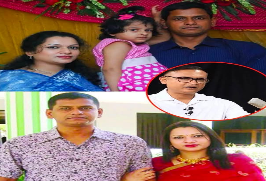
The body of retired army officer Major Zahidul Islam allegedly remained at the morgue of Dhaka Medical College for nearly two and a half years. According to his family and people familiar with the matter, despite the passage of such a long period, the body was never handed over to his family. Eventually, the family was reportedly unable to locate his remains.
Major Zahidul Islam was known as a disciplined, intelligent, and highly capable officer of the Bangladesh Army. He was commissioned into the army in 2000 through the 43rd BMA Long Course. During his military career, he served in the United Nations peacekeeping mission in Congo. He also completed a mid-career course in Pakistan and advanced training in Canada.
On September 2, 2016, Major Zahid was killed in what police described at the time as a gunfight beneath his rented residence in Rupnagar, Dhaka. According to the police account, he allegedly attacked law-enforcement personnel with weapons, prompting them to open fire in self-defense. He was also portrayed as having links to militant activities.
However, following the political change on August 5, 2024, new allegations concerning Major Zahid’s death came to light. A complaint submitted to the International Crimes Tribunal alleged that his killing may have had a different motive and that he possessed important information about the 2009 Pilkhana massacre.
According to these allegations, Major Zahid had been posted to Pilkhana in 2009 but did not ultimately join there. At the time, his friend Captain Shahid Mazharul Haider was serving at Pilkhana. During the violence on February 25, 2009, Captain Mazharul reportedly called Major Zahid and told him that army officers were being killed one after another. The details of that phone conversation, as well as Major Zahid’s subsequent position regarding the Pilkhana incident, have since become the subject of various claims and questions.
His family and others familiar with the case allege that Major Zahid remained vocal about the Pilkhana massacre and that he possessed sensitive information that could have been politically damaging to the government of the time. They further allege that he was eventually forced into retirement from the army in 2015.
Then came September 2, 2016.
According to his family, Major Zahid was taken from his residence, subjected to severe torture, and subsequently brought downstairs, where he was shot at close range. It has been alleged that his body bore 29 bullet wounds. There have also been allegations that his eyes were severely mutilated.
The police version, however, was substantially different. The first information report reportedly stated that Major Zahid had attempted to attack police officers with a knife and a pistol, forcing them to fire 29 rounds in self-defense. His family and other parties involved in the case dispute this account, alleging that forensic evidence and eyewitness testimony did not support the official version and that the entire incident had been staged.
The tragedy did not end with Major Zahid’s death. His family allegedly faced years of persecution and legal harassment. According to the family, on the night of his killing, his wife, Jebunnahar Shila, and their two young children were taken away by law-enforcement authorities. The family claims that Shila and her younger daughter were held for an extended period in what has been described as a secret detention facility, commonly referred to as an “Aynaghar.”
On September 10, 2016, an operation in Azimpur, Dhaka, was reportedly presented as a rescue of three children allegedly connected to militant activities. Among those children was Major Zahid’s five-year-old daughter, Junaira Binte Zahid, according to allegations made by the family.
Later, on December 24, 2016, another alleged militant operation was carried out involving his wife and younger daughter, according to the family. Shila subsequently faced multiple cases related to alleged militant activities.
After spending nearly four years in detention, she was granted bail. However, the bail was later cancelled and she was sent back to prison. On August 31, 2024, she was granted bail again. Nevertheless, the cases against her have not been fully resolved, leaving her still burdened by the allegations.
The family also claims that Major Zahid’s parents were devastated by the loss of their only son. According to them, both parents suffered serious health complications and died within a year of his death.
The allegations surrounding Major Zahid’s killing, the disappearance of his remains, the detention of his wife and children, and the multiple cases brought against his family have raised serious questions that remain unanswered.
What really happened on the night of September 2, 2016? Why was a former army officer killed in such circumstances? Why was his body allegedly not handed over to his family? And was there any connection between his death and the Pilkhana massacre?
Only an independent, transparent, and comprehensive investigation can establish the truth behind these longstanding questions.
The allegations of prolonged persecution faced by Major Zahid’s family also warrant an impartial investigation. In any state governed by the rule of law, allegations that a family was subjected to years of detention, legal proceedings, the loss of a loved one, and uncertainty surrounding the whereabouts of his remains cannot simply be ignored.